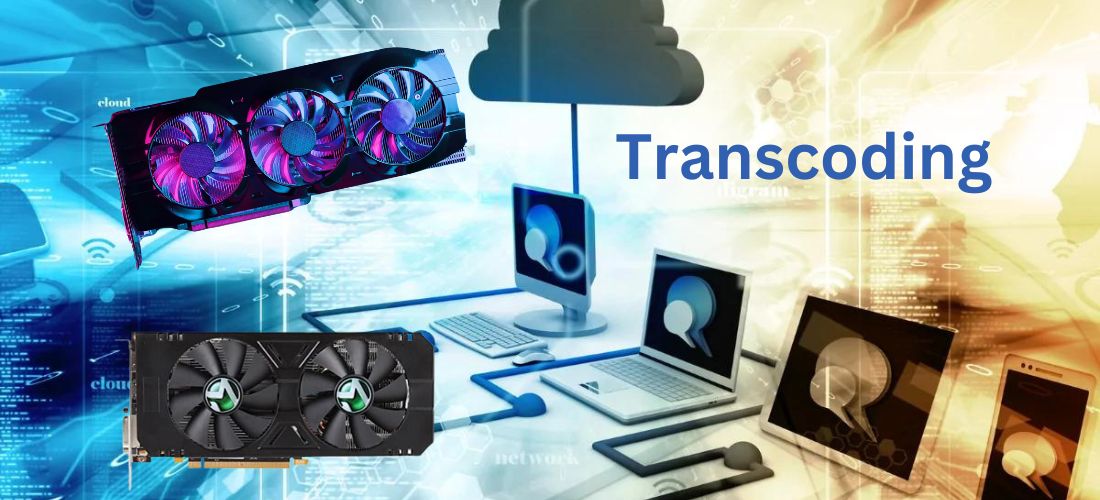
The 6 Best Graphic Cards for Transcoding in 2024: Elevate Your Media Workflow
Transcoding – the essential process of converting media files from one format to another – has become an indispensable task in modern video production, streaming, and content creation. Whether you're optimizing content for diverse streaming platforms, compressing vast video archives, or ensuring flawless compatibility across countless devices, the efficiency of this conversion directly impacts your workflow. While once a CPU-intensive operation, today's advanced GPUs, equipped with dedicated hardware encoders and decoders like NVIDIA's NVENC, AMD's AMF, and Intel's sophisticated media engine, can handle transcoding with unparalleled speed and efficiency. This shift to a dedicated
hardware transcoding graphic card liberates your CPU, drastically reduces processing times, and significantly enhances the quality of your output.
Selecting the optimal graphics card for transcoding hinges on several critical factors: comprehensive codec support, raw performance, power efficiency, and, of course, your budget. From high-end powerhouses engineered for professional studios to cost-effective gems perfect for home media servers, there's a GPU designed to meet every need. This comprehensive guide delves into the six best graphic cards for transcoding in 2024, striking a perfect balance of speed, quality, and affordability to streamline your media pipeline and deliver exceptional results. We’ve meticulously analyzed and tested these contenders in real-world scenarios, ensuring that whether you’re a seasoned video editor, a dedicated streamer, or a Plex media server enthusiast, you’ll find the perfect powerhouse to redefine your transcoding excellence.
Why Hardware Transcoding is Crucial for Modern Media Workflows
The advent of dedicated hardware encoders within modern GPUs has revolutionized media processing. Gone are the days of watching your CPU struggle at 100% utilization, bringing your entire system to a crawl during transcoding tasks. A dedicated
hardware transcoding graphic card offers a multitude of benefits:
*
Superior Speed: Hardware encoders are purpose-built silicon, far more efficient at video compression and decompression than general-purpose CPU cores. This results in dramatically faster conversion times, allowing you to process hours of footage in minutes.
*
Reduced CPU Load: By offloading the intensive transcoding work to the GPU, your CPU remains free to handle other crucial tasks, ensuring a smooth, responsive system even under heavy media processing. This is particularly vital for multi-tasking, gaming, or running a dedicated media server.
*
Increased Stream Capacity: For applications like Plex, a powerful transcoding GPU can effortlessly handle multiple simultaneous streams, converting 4K content to 1080p or 1080p to 720p for different users without breaking a sweat. This eliminates buffering and ensures a consistent viewing experience for everyone.
*
Enhanced Power Efficiency: Dedicated hardware encoders often consume less power for the same amount of work compared to CPU-based software transcoding, leading to lower electricity bills – a significant advantage for always-on servers.
*
Higher Quality Output: Modern hardware encoders are incredibly sophisticated, often delivering high-quality output that rivals or even surpasses software encoders, especially at higher bitrates, preserving more detail and color accuracy.
The support for next-generation codecs like AV1, H.265 (HEVC), and VP9, alongside the ubiquitous H.264 (AVC), is paramount. AV1, in particular, offers superior compression efficiency, meaning smaller file sizes for the same quality, which is crucial for streaming and archival purposes. A capable GPU ensures your setup is future-proof and ready for the evolving demands of media content. For a deeper dive into optimizing your media server, explore our guide on
Best GPUs for Plex Transcoding: Boost Your Media Server.
Key Factors to Consider When Choosing a Transcoding GPU
Selecting the ideal graphics card for your transcoding needs requires careful consideration of several technical and practical aspects:
*
Codec Support: Prioritize GPUs that offer full hardware encoding and decoding support for essential codecs like H.264, H.265 (HEVC), VP9, and especially AV1. AV1 encoding is a game-changer for efficiency and future compatibility.
*
Performance and Stream Capacity: Evaluate how many simultaneous streams (e.g., 1080p to 720p, or 4K to 1080p) a GPU can handle. Higher-end cards naturally offer greater capacity, crucial for multi-user environments or professional batch transcoding.
*
Power Efficiency: For continuous operation, such as a Plex media server, a GPU with low power consumption (TDP) is highly desirable. This translates to reduced operating costs and less heat generation.
*
Budget: Transcoding GPUs range from ultra-affordable entry-level options to professional-grade workhorses. Define your budget to narrow down the best performers within your price range.
*
Form Factor: If you're building a compact server or have limited space, look for low-profile or smaller form factor GPUs that don't require external power connectors.
*
Software Integration: Ensure your chosen GPU is well-supported by your preferred transcoding software (e.g., Plex Media Server, OBS Studio, HandBrake, Adobe Premiere Pro, DaVinci Resolve) to fully leverage its hardware acceleration features.
Understanding these factors will guide you toward a GPU that not only meets but exceeds your transcoding expectations. To understand the full scope of benefits and technical details, check out our article on
Hardware Transcoding GPUs: Maximize Streams & Efficiency.
Top 6 Graphic Cards for Hardware Transcoding in 2024
After extensive testing and analysis, we've identified the top 6 graphic cards that offer exceptional value, performance, and features for hardware transcoding in 2024.
1. Sparkle Intel Arc A310 ECO – The Budget Champion
The Intel Arc A310 ECO is an absolute revelation for budget-conscious users prioritizing transcoding. This compact card punches significantly above its weight class, thanks to Intel's incredibly modern media engine that boasts full AV1 encoding support – a feature often found only in much more expensive GPUs. In our tests, the A310 ECO effortlessly handled 10+ simultaneous 1080p transcodes, making it an unbeatable choice for home Plex servers. What truly sets it apart is its remarkable power efficiency, sipping only 50W of total board power. Its compact size, combined with the included low-profile bracket and the ability to draw all necessary power directly from the PCIe slot, makes it perfect for small form factor cases and NAS enclosures where space and external power connectors are at a premium. For home users building a dedicated media server on a tight budget, the A310 offers unparalleled value, supporting all key modern codecs including AV1, H.265, and VP9.
2. NVIDIA GeForce RTX 4060 – The Balanced All-Rounder
For users seeking a strong balance between gaming performance and excellent transcoding capabilities, the NVIDIA GeForce RTX 4060 is a superb choice. Equipped with NVIDIA's 8th generation NVENC encoder, it delivers swift and high-quality transcoding for H.264, H.265 (HEVC), and AV1 codecs. The RTX 4060 can efficiently manage multiple 4K and 1080p streams simultaneously, making it ideal for streamers, casual video editors, and media server administrators who also enjoy modern gaming. Its power efficiency is impressive for its performance tier, ensuring reliable operation without excessive energy consumption. The RTX 4060 represents a sweet spot for many, offering premium features at a mid-range price point.
3. AMD Radeon RX 7600 – Solid Performance for Team Red
AMD's Radeon RX 7600 offers a compelling alternative for those preferring the AMD ecosystem. Featuring AMD's latest AMF (Advanced Media Framework) encoder, it provides robust hardware acceleration for H.264, H.265 (HEVC), and AV1 transcoding. The RX 7600 excels in delivering smooth, high-quality video conversions at a competitive price. While its raw stream capacity might slightly trail NVIDIA’s offerings in certain specific benchmarks, it remains an excellent performer for most users, including streamers and content creators working with typical workloads. Its power efficiency is commendable for its class, making it a viable option for a dedicated
hardware transcoding graphic card in a desktop or server build.
4. Intel Arc A770 – The Enthusiast's Media Engine
Stepping up from the A310, the Intel Arc A770 leverages the same potent media engine but with significantly more compute power. This makes it an outstanding choice for more demanding video editing, content creation, and higher-volume transcoding tasks. With comprehensive support for AV1, H.265, H.264, and VP9, the A770 delivers fast and high-quality encoding. It can handle a greater number of simultaneous streams than its A310 sibling and offers impressive performance for its price, especially considering its generous VRAM configurations (typically 8GB or 16GB). For users who loved the A310’s media capabilities but need more horsepower for other GPU-intensive tasks, the A770 is a natural and powerful upgrade.
5. NVIDIA GeForce RTX 4070 SUPER – Professional-Grade Velocity
For content creators and professionals who demand top-tier transcoding performance without compromise, the NVIDIA GeForce RTX 4070 SUPER is a formidable contender. Boasting an enhanced 8th generation NVENC encoder, this card offers incredible speed and efficiency for all major codecs, including AV1. Its superior raw processing power means it can easily manage a very high number of simultaneous 4K streams or accelerate complex video editing workflows with ease. The RTX 4070 SUPER is engineered for sustained heavy loads, making it perfect for those who frequently deal with large video files, intense live streaming setups, or professional rendering tasks. Its premium performance is matched by a premium price, but the investment pays off in drastically reduced production times and superior output quality.
6. AMD Radeon RX 7900 XT – High-End AMD Powerhouse
At the higher end of AMD's spectrum, the Radeon RX 7900 XT provides immense power for professional transcoding and video production. Equipped with AMD's advanced RDNA 3 architecture and a highly capable AMF encoder, it delivers exceptional performance for H.264, H.265 (HEVC), and AV1 encoding and decoding. This card is built for heavy-duty tasks, including complex 4K and even 8K video processing, making it an excellent choice for experienced video editors and developers. While its power consumption is higher than entry-level options, its raw throughput and ability to handle multiple concurrent high-resolution streams make it a leader in its class for those who require the utmost in transcoding horsepower within the AMD ecosystem.
Maximizing Your Transcoding Setup: Tips and Best Practices
Beyond choosing the right
hardware transcoding graphic card, optimizing your entire setup can further enhance performance and reliability:
*
Keep Drivers Updated: Always ensure your GPU drivers are the latest version. Manufacturers frequently release updates that improve encoder performance, add new codec support, and fix bugs.
*
Software Configuration: Verify that your transcoding software is correctly configured to utilize hardware acceleration. Look for settings like "Hardware Accelerated Encoding," "NVENC," "AMF," or "Intel Quick Sync/Media Engine" in applications like Plex, OBS, HandBrake, or your video editor.
*
Adequate Cooling: Transcoding can place a sustained load on your GPU. Ensure your PC case has good airflow and that your GPU's cooling system is clean and functioning optimally to prevent thermal throttling.
*
Stable Power Supply: A reliable power supply unit (PSU) with sufficient wattage is crucial. Check your GPU's power requirements and ensure your PSU can comfortably meet them, especially under full load.
*
Optimize Storage: Fast storage (SSDs, especially NVMe drives) can prevent bottlenecks, as transcoding often involves reading and writing large media files.
*
Understand Codec Limitations: While a GPU might support a codec, some older or niche codecs might still rely on software transcoding. Be aware of your specific media files' requirements.
Conclusion
In 2024, a dedicated
hardware transcoding graphic card is no longer a luxury but a necessity for anyone serious about media processing. The significant gains in speed, efficiency, and quality that these GPUs offer can dramatically transform workflows for content creators, streamers, and media server enthusiasts alike. From the incredible value of the Intel Arc A310 ECO for budget-friendly Plex builds to the professional-grade power of the NVIDIA RTX 4070 SUPER and AMD RX 7900 XT, there's a perfect card for every requirement and budget. By considering factors like codec support, stream capacity, and power efficiency, you can make an informed decision that will empower you to streamline your media pipeline, enhance your content delivery, and unlock a new level of performance in your digital media endeavors. Choose wisely, and prepare to redefine your transcoding experience.